Brain and Spinal Cord Donation
A critical way to unlock deep insights into ALS biology that pave the way to breakthroughs.
A powerful expansion of ALS research
Brain and spinal cord donation is one of the most meaningful gifts a person with ALS, or their loved ones, can offer.
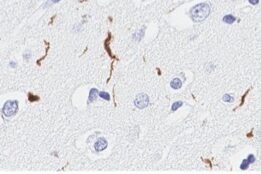
These donations give scientists something they simply cannot see through scans, blood tests, or clinic visits in people living with the disease: a direct look at how ALS changes cellular and molecular structures and pathways. This window into the disease’s biology in the very organs it affects is essential for understanding the biology and pathology of ALS. Observations made in postmortem tissue help scientists develop the drug targets and biomarkers that will one day allow for earlier diagnosis, better monitoring, and more effective treatments.
Before Target ALS existed, researchers struggled with a lack of access or the availability of biofluid samples and postmortem tissue to answer the most urgent questions about ALS. Through brain and spinal cord donation, facilitated by our dedicated team, we’re finally changing that. Every donation is a gift and leaves a lasting legacy, fueling discoveries, shaping future therapies, and offering hope to families who will face ALS in the years ahead. It is a profound act of compassion that helps move the entire field closer to a world where everyone lives.
The basis of our approach
The value of brain and spinal cord donations
While our AGRI studies collect blood, urine, and cerebrospinal fluid (CSF) to reveal important clues about ALS biology, brain and spinal cord donations (known as postmortem tissue) offers something no other approach can. A medical autopsy remains the gold standard for diagnosing and classifying neurological diseases; it provides the most definitive, detailed understanding of what ALS does inside the brain and spinal cord.
These tissues allow scientists to study ALS at the molecular and cellular level, revealing changes, pathways, and patterns that simply can’t be seen through scans, blood tests, or clinical exams. This depth of insight is essential for identifying genetic markers, understanding how the disease progresses, and accelerating the development of future therapies.
When AGRI’s in-life data is paired with postmortem brain and spinal cord donation, the science becomes far more powerful. It gives researchers a continuous line of sight from how ALS behaves in a living person to what the disease ultimately does in the brain and spinal cord. That continuity allows for a truly comprehensive, long-view study of ALS, helping scientists connect the dots in a way no single approach could ever achieve.
Our postmortem tissue core initiative
Target ALS was the first and only ALS foundation to create and launch a postmortem tissue biorepository in 2014 for the global ALS research community. Target ALS has now expanded its Postmortem Tissue Core to include more than 500 cases, including over 90 familial ALS (fALS) cases, genetic forms of the disease that offer essential clues to why ALS develops and progresses. Our initiative spans six leading academic centers with deep expertise in ALS and postmortem tissue banking.
These centers were strategically selected to overlap with our AGRI sites. This gives people living with ALS the opportunity to contribute to research both during life and after passing. Donation of biofluids collected over the course of ALS as well as brain and spinal cord tissue after passing enables creation of a powerful dataset that provides insights into the disease biology from the initial clinical presentation through its progression, including at the end stage. This type of continuity is rare in ALS research and it’s invaluable for understanding the disease at every stage.
To ensure high-quality collection and rapid processing, brain and spinal cord donations typically need to occur within a 200-mile radius of a participating center. At each site, tissues are handled with extraordinary care and respect for the donor, then paired with matched clinical, genomic, and biological data that make every sample a cornerstone for discovery. Every donation is utilized well, resulting in thousands of new data points from a single case.
The Importance of Early Contact and Family Conversations
Reaching out early makes all the difference. Because most people with ALS do not pass away in a hospital, arrangements need to be coordinated between your family’s chosen funeral home, your next of kin, and the research site that will receive the donation. Some sites offer pre-enrollment, while others can only accept authorization after death through your designated decision-maker.
For that reason, we strongly encourage discussing your wishes with your family ahead of time and contacting the site nearest you as soon as you’re considering donation. Early conversations ensure your wishes are understood and give everyone the time they need to prepare.
Tissue is most valuable when collected soon after passing, within 72 hours, so having logistics in place beforehand helps the process move smoothly and ensures your gift can make the greatest possible impact on ALS research.
There is no cost to families for donation or transportation. However, each site has its own requirements, for example, some can only accept donors who live within a certain distance, or who have been seen by the site’s clinical team before enrollment. Because these details vary, we encourage anyone interested in donation to fill out this form to connect with the Principal Investigator and Target ALS Program Manager, Marina Selenica They can walk you through eligibility, answer questions, and help ensure the process aligns with your wishes.
How it works: A Simple, Supported Process
The most important step is reaching out early. Early contact helps ensure your wishes can be honored and that all logistics are in place.
- Get in touch with the team
- Fill out this form to connect with your site’s postmortem coordinator, principal investigator (PI), or the Target ALS program manager. They’ll guide you through what to expect and answer any questions.
- Pre-enroll or discuss wishes with family
- At some sites you are able to pre-enroll in the program. If pre-enrollment isn’t possible at your site, simply share your wishes with your family or next of kin so they know to notify the team when the time comes. Permission for the autopsy and donation can only be given after the individual has passed away if pre-enrollment is not available. The next of kin will then provide consent.
- Next of kin provides notification and completes consent
- When appropriate, a family member or legally authorized representative notifies the site and signs the required consent form. This step activates the entire process.
- Transportation arrangements begin
- Once consent is received, the postmortem coordinator initiates transportation. Everything is handled quickly and professionally to preserve tissue quality.
- Ongoing support from the research team
- Coordinators stay in close contact, helping manage transportation and logistics. Families can reach out to the consenting coordinator at any time for support.
- Autopsy and tissue procurement (2–4 hours)
- A specialized medical team performs the autopsy, collecting the brain and spinal cord with great care. This procedure is done in a way that fully preserves your loved one’s appearance. An open-casket service remains absolutely possible.7. Return to the funeral home of choice
- After tissue procurement is complete, your loved one is transported to the funeral home you selected, and normal funeral arrangements proceed as planned.
Frequently Asked Questions
When postmortem tissue is paired with deep multi-omic profiling, biofluids, and clinical information someone shares during life, it creates a powerful, full-circle contribution to ALS research. This continuity helps scientists trace the disease across time and uncover insights that would otherwise remain hidden. These gifts move the field forward in ways that truly honor each donor’s legacy, fueling the search for better diagnostics, new treatments, and a future where ALS is no longer a devastating diagnosis.
Additional ALS research studies
Through AGRI, we’re leading two major studies that are unlocking insights and changing the way we understand and treat ALS.
Our postmortem tissue collection at work
Springboard Fellows: The Next Wave of ALS and FTD Scientists
December 18, 2025