Funding fast-moving research
Our grants are ensuring that scientists with complementary expertise work collaboratively to accelerate ALS research like never before.
Where science stands today and where it’s rapidly heading.
Explore the latest breakthroughs, clinical trials, promising treatments, and rapid pace of progress.
For generations, ALS remained a devastating disease with almost no answers. But researchers, people living with ALS, families, and advocates kept pushing, step by step, until science finally began to unlock long-hidden clues. From the discovery of ALS genes to the rise of precision medicine and the approval of the first gene-targeted therapy, progress has been hard-won but undeniable. This timeline reflects not just global scientific milestones, but the collective resolve driving the field forward.

Charcot formally identifies the disease.
Proves ALS can be genetic and kickstarts the era of ALS genetics research.
A defining discovery for ~97% of ALS cases.
The most common genetic cause of ALS and FTD.
Aimed at breaking down barriers and accelerating ALS breakthroughs through an Innovation Ecosystem based on principles of collaboration and democratization of ALS research landscape.
Raises global awareness about ALS.
Reveals the critical role of TDP43 in regulating proper RNA splicing, RNA dysregulation as a key molecular pathology of ALS, and a new therapeutic target class.
Transforms trial design and accelerates therapeutic development.
Gene-targeting therapies enter the clinic for SOD1 and C9orf72.
Shows biomarker impact and functional slowing.
First gene-targeted ALS therapy; first approval using a biomarker.
ALS research is moving faster than ever, but the reality is still stark: we have only a handful of approved treatments, and their benefits remain limited for most people. At the same time, breakthroughs in genetics, biomarkers, data science, and drug discovery are unlocking insights that simply didn’t exist a few years ago.
Urgency is meeting momentum, but the landscape remains fragmented and slow to translate discovery into impact. That’s exactly why Target ALS exists.
What is driving progress?
The scientific picture of ALS has changed dramatically in the past decade. What was once a narrow field with only a few known disease drivers has exploded into a far more detailed map of how ALS begins and progresses.
Today, researchers have uncovered:
A growing list of at least 40 causative and risk genetic factors
Landmark discoveries like C9orf72, SOD1, FUS, and TARDBP have revealed the genetic architecture of ALS, showing that inherited and sporadic forms share overlapping pathways. Each new gene discovery unlocks clues about vulnerability, progression, and potential therapeutic entry points.
The defining role of TDP-43 pathology
We now know that 97% of ALS cases share a common hallmark: the nuclear loss and cytoplasmic aggregation of TDP-43. This insight has reframed nearly every aspect of ALS research and highlighted a unifying biological pathway across genetic and sporadic disease.
RNA dysregulation as a core driver of disease
A major milestone has been the realization that TDP-43 dysfunction disrupts RNA processing at multiple layers. This includes alternative polyadenylation errors, splicing defects, and the emergence of cryptic exons and altered miRNAS. These abnormalities collectively destabilize essential proteins and strain neuron resilience.
Breakthrough tools transforming what we can see and solve
Cutting-edge technologies are accelerating discovery: long-read sequencing, advanced proteomics, high-resolution imaging of individual cells and their contents, CRISPR-based perturbations, and access to comprehensive human biosamples and multi-omic datasets derived from them are revealing disease mechanisms with unprecedented clarity. Analyses of postmortem tissue and biofluids from patients treated with ASO therapies is providing profound insights into disease biology and future therapeutic design. These tools are enabling scientists to detect biological changes that were invisible even five years ago.
Together, these advances have reshaped our understanding of ALS. They’ve revealed common pathways across patient populations, filled in gaps in our understanding of the molecular events that precede neuron loss, and opened new avenues for targeted therapies that simply weren’t possible before.
One of the biggest accelerators in ALS research has been the rise of reliable biomarkers. For decades, ALS drug development was slowed by a basic problem: there was no objective way to measure whether a therapy was actually changing the underlying biology. That barrier is finally breaking.
Neurofilament light chain (NfL) as a proven biomarker
NfL has become the first widely validated surrogate indicator of ALS progression and treatment response. Its use in clinical trials showed that lowering NfL strongly correlates with slowing neurodegeneration, giving scientists a clear, quantifiable signal that a drug is working. This has reshaped trial design and accelerated decision-making across the field. Furthermore, NfL has been shown to rise several months to years prior to symptom onset and is being evaluated for its use as a prognostic biomarker to intervene in patients early, even prior to symptom onset.
Emerging biomarkers: cryptic peptides and deeper RNA signatures
Another promising frontier is the discovery of cryptic peptides, abnormal protein fragments that appear when TDP-43 dysfunction causes RNA processing errors. These peptides are specific, measurable, and tightly linked to the disease’s core biology. Advances in proteomics, combined with better access to high-quality samples, are pushing cryptic peptides toward becoming next-generation biomarkers. Target ALS–supported researchers are leading the charge, mapping these signatures and building the tools needed to track them in real time.
Tofersen approval: a turning point for precision ALS medicine
The FDA approval of Tofersen, the first treatment for SOD1 ALS, did more than bring a therapy to one genetic subtype. It provided the following critical insights and learnings:
The ALS therapeutic landscape has shifted from a handful of exploratory efforts to a fully engaged, innovation-driven pipeline. In 2005 there were no drug companies investing in ALS. with the exception of Riluzole. Now there are at least 100+ biotech and big pharma developing assets in this space. As the understanding of genetics, biology and biomarkers of ALS has advanced, it has provided insights into where and how to intervene, pharmaceutical and biotech companies began to invest in ALS with far greater conviction.
A rapidly expanding clinical trial ecosystem
Today there are dozens of active ALS trials spanning early discovery through late-stage development. Companies are testing first-in-human therapies built around brand-new therapeutic modalities including antisense oligos, CRISPR-based strategies, RNA-targeted approaches, advanced cell therapies, and next-generation small molecules. Adaptive trial designs and stronger diversity efforts are helping the field move faster while capturing more meaningful data.
A mature infrastructure that makes trials feasible
The ALS community now has a well-established clinical trial network. Platforms like NEALS and the Healey Platform Trial have proven that trials can be run efficiently and at scale. This infrastructure reduces barriers for companies entering the space because they no longer need to build the operational machine themselves. In addition, advances in decentralized clinical trials, taking advantage of web-based or digital technologies and at-home ALS-FRS-R assessments allows for greater inclusion of ALS patients in clinical trials benefiting both patients and drug companies.
The rise of collaborative, “outsourced biology” R&D
A major reason pharma is leaning into ALS is the ability to plug into an ecosystem rather than recreate it in-house. Companies can now access what used to be impossible to find:
Our mission is focused on not only driving ALS research, but transforming how it’s done in the first place. We make change by funding, enabling, and conducting research at every level.

Our grants are ensuring that scientists with complementary expertise work collaboratively to accelerate ALS research like never before.

We provide essential tools and resources to scientists globally t with no-string -attached.
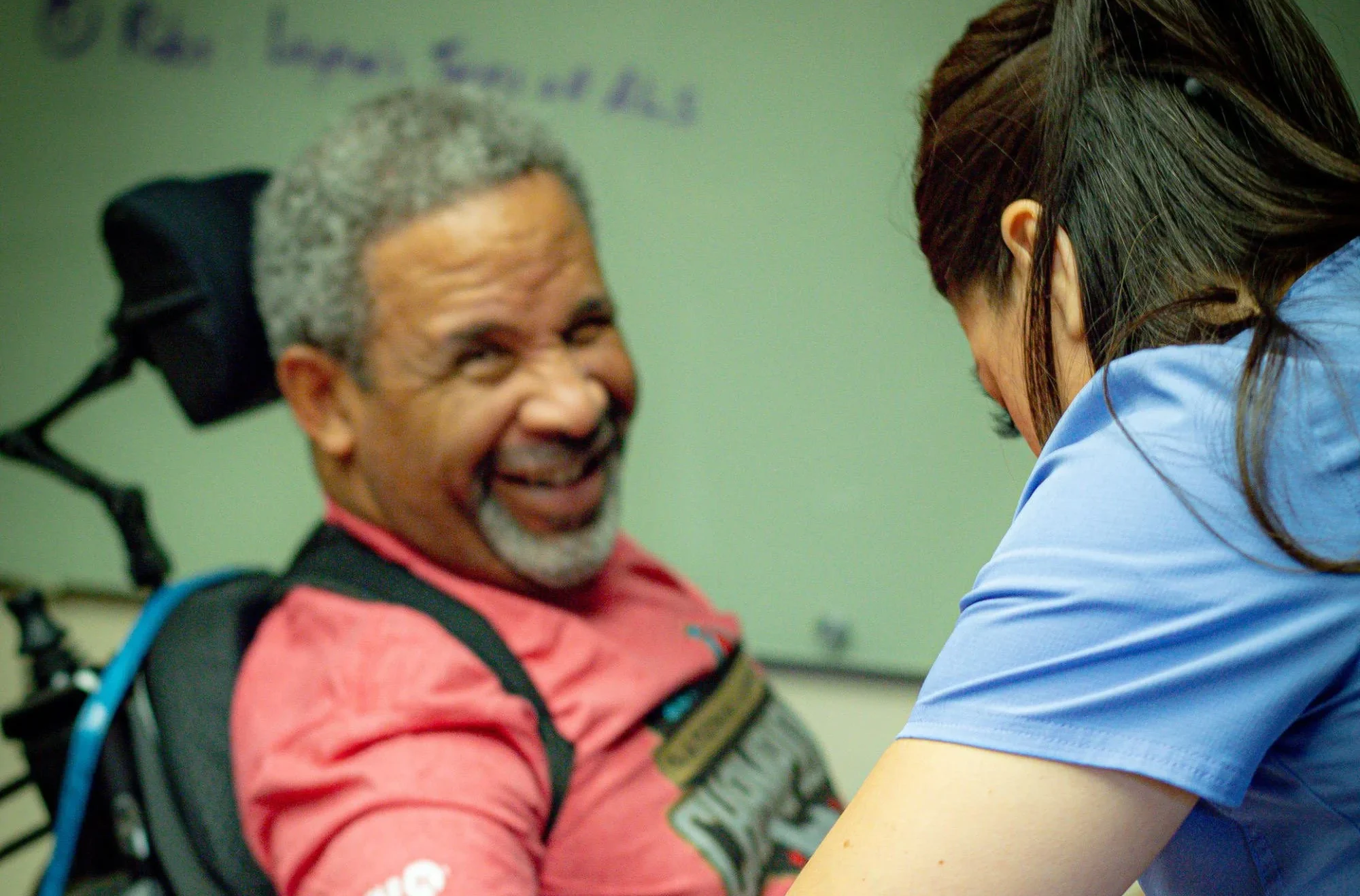
Our ALS Global Research Initiative (AGRI), which includes the most comprehensive and inclusive ALS study in the world, is expanding our understanding of ALS and unlocking insights.
Our Innovation Ecosystem model is changing the ALS research landscape by accelerating the pace of scientific discovery, breaking down barriers that have limited progress, and building powerful collaborations across industries.
Right now, we’re funding and empowering scientists as they pursue multiple promising avenues to understand and effectively treat ALS. Across the ALS research landscape, Target ALS and our partners are focused on three areas that will make the most impact for those living with ALS: Basic Biology, Biomarkers, and Drug Discovery.
Learn more about our approach and model here.

January 23, 2026

ALS research is moving faster than at any point in history. The pipeline is expanding, biomarkers are reshaping how trials are designed, and precision therapeutics are becoming a practical reality, not a distant concept. Collaboration across academia, industry, and the ALS community is driving momentum that simply didn’t exist a decade ago. Our role is to make sure that progress continues, ensuring the most promising ideas have the data, tools, and support they need to move forward.