What ALS Taught Me About Time
November 24, 2026 Daniel L. Doctoroff

For most of my life, I lived in the future.
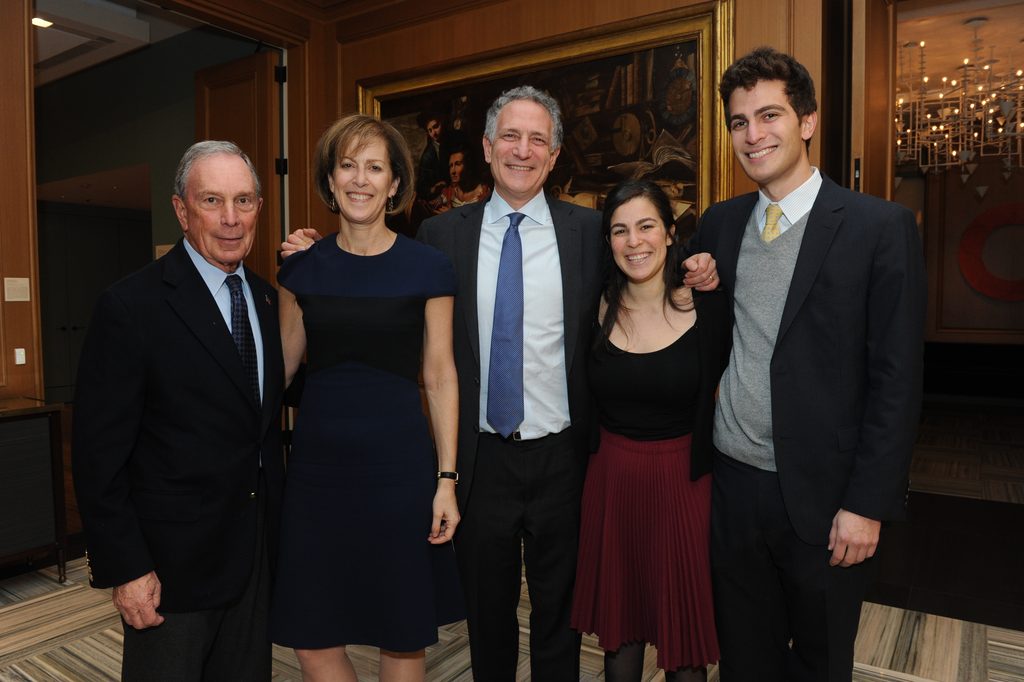
As Deputy Mayor for Economic Development and Rebuilding in the Bloomberg administration, my job was to imagine what New York could become in ten, twenty, twenty-five years, and then push as hard as I could to get there. I set deadlines, and I drove them. I thought about what came next so constantly that I rarely stopped to enjoy anything we had accomplished. My kids will tell you I tried hard to be present. They will also tell you I wasn’t always very good at it.
ALS changed that. It has taught me to live in the now. And, in a way I never expected, it has given me the most important future I have ever worked toward.
As this year comes to a close, I want to share what I have learned, where we are, and why I believe the year ahead matters so much.
A disease that haunted my family
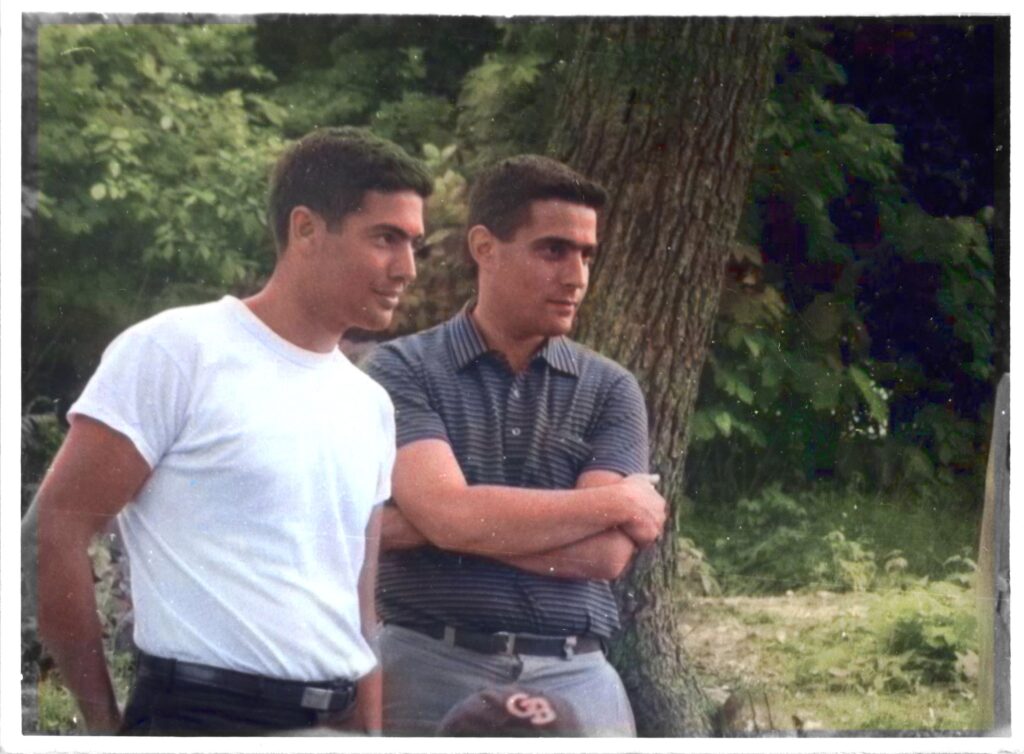
My father, Martin, died of ALS in 2002. At the time, we thought it was a tragic fluke. Then his brother, my uncle Mike, was diagnosed, and he died in 2010. It was clear this was not random. ALS was in my family.
When I started looking into the state of ALS research, what I found stunned me. In the 140 years since the disease was first described, progress had been minimal. The problem was not a lack of brilliant scientists or promising ideas. The problem was that the system was not designed to move fast enough. Academic and industry researchers worked in silos. Data and tools were hard to get. Funding flowed to the same small circle. Few drug companies believed ALS was worth the risk.
So in 2013, we built something different. Target ALS prioritizes funding collaborative teams. We bring academic and industry scientists together as partners. We make research tools available to any scientist in the world, with no strings attached. We don’t take a share of intellectual property. We created an independent review committee, so all funding decisions remain unbiased, and the best science wins. And every year we bring the entire field together in one room to share ideas, forge new relationships and keep building to a better future.
That same year, my college roommate, Steve Winthrop, was diagnosed with ALS. Over the next five years, I watched him meet the disease with patience, openness, and a remarkable gift for bringing people together. His willingness to be vulnerable gave his words extra weight with researchers and donors alike. Steve died in 2018. I think about him often.
The diagnosis
In 2019, I first noticed some weakness in my hip. Then, in September 2021, while on a trip to Iceland with my wife, Alisa, I fell out of a kayak. As I struggled to get back in, I suddenly felt like I was suffocating. It was strange. Just a month later, in October, I was diagnosed with ALS.
Despite everything my family had been through, I never truly believed it would happen to me. Then came a twist. My father and uncle both carried the C9orf72 mutation, the most common genetic cause of ALS. I do not. I tested negative for every known ALS mutation. It was disorienting, and it showed me once again how much we still don’t understand about this disease.
Telling our children was devastating. And then they surrounded me with exactly the right mix of love, humor, and presence. I am grateful for their love and support every day.

Almost immediately, I called Manish Raisinghani, our CEO. I told him I had ALS, and before he could catch his breath, I told him to think big. We were going to scale this up, and we were going to move quickly.
We set a goal of raising $250 million, more than anyone had ever raised for ALS. I had no idea whether I could reach it. Friends, colleagues, and people with no personal connection to ALS said yes, not out of sympathy, but because they believed in the plan. We achieved that goal in 2024 and kept going, and today, Target ALS has become the largest private funder of ALS research in the world.
What ALS has taken, and what it has given
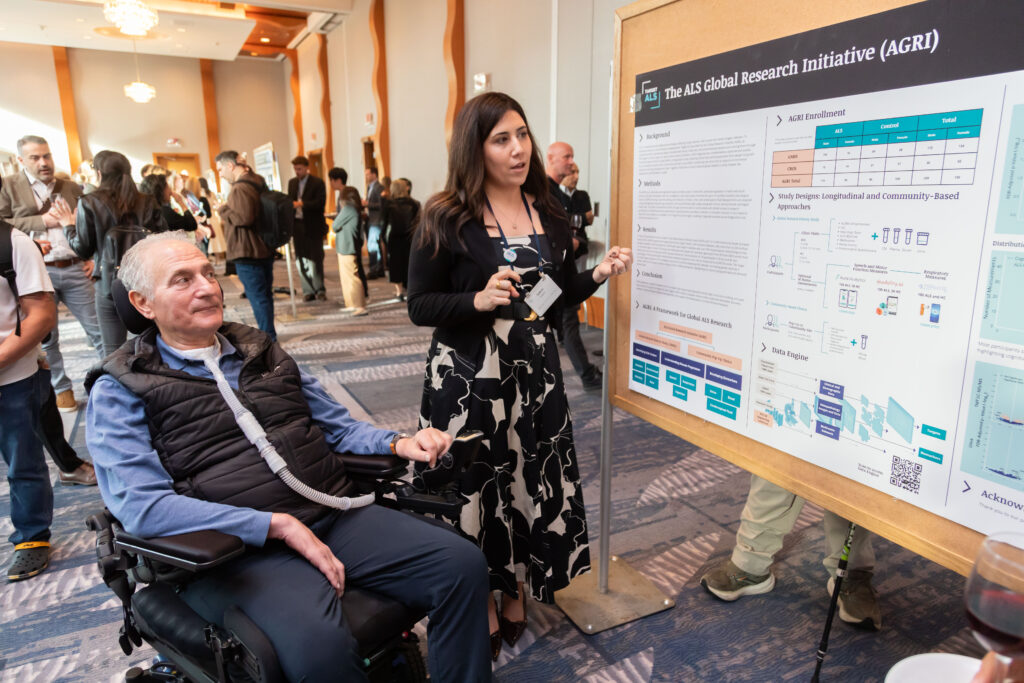
ALS has taken a great deal from me. I have lost my voice. I have lost the ability to eat. My hands and arms have weakened, and my neck muscles have deteriorated. I try to communicate using eye-gaze technology, but it doesn’t always work as it should. I eat through a feeding tube. I can still control my wheelchair.
And I adapt. I have always believed you have to make adaptation into a fun challenge, because there is always a better way. Early on, that meant learning to eat with my left hand and getting around on a Vespa. Today, it means finding new ways to stay in the conversation.
What I didn’t expect was what this disease would give me.
I am more patient than I used to be. More present. Probably a bit nicer. For the first time in my life, I am not always on to the next thing. I have traveled with Alisa and with old friends. I have watched our five grandchildren grow. Alisa and I met when we were 18, and this experience has made our bond stronger than ever. I’m happy. I know that may be hard to believe, but it’s true. I’m lucky.

Where we are now
When I was first diagnosed, progress was limited. Today, the picture is different.
When we started Target ALS, there were only about five ALS drug discovery programs in the world. A decade later, there were at least 75. At our first annual meeting, only eight companies were present. This year, more than 1,200 people from more than 35 countries joined us: scientists, clinicians, companies, investors, and supporters. Researchers now tell us it is the one meeting they cannot miss.
Our tools and resources have been used in close to 2,000 projects around the world. Research we funded has helped launch clinical trials and new biotech companies. Our Data Engine gives any researcher, anywhere, free access to data and analysis tools. There is now an approved therapy for people with SOD1 mutations. And new genetic approaches, including CRISPR, are moving to real-world application.
Not everything has worked. The first clinical trial targeting C9, the mutation that took my father and uncle, engaged its target but did not improve symptoms. I have never viewed setbacks like that as failures. They are steps on the path forward. Every answer leads to better questions, and that is how science advances.
The most important change is harder to measure. The culture has changed. Researchers are collaborating in ways that didn’t exist ten years ago. Scientists and physicians who have always been careful with their words are now saying that ALS is a solvable disease.
Why urgency still matters
I am not naïve. ALS is still fatal. One in 400 people alive today will develop it. This year, our community lost too many people we loved. Each of those losses reminds us we are not moving fast enough.
That is why I am not stopping. I remain optimistic. Not necessarily about what the future holds for me, but about what we are building for those who come after me. I believe we are changing what an ALS diagnosis will mean for them.
None of this is happening by chance. It is the result of a deliberate strategy, and of people who chose to invest in something bigger than any one of us.
An invitation
As the year ends, many of you are deciding where to direct your generosity. I hope you will consider joining us.
Every gift helps fund collaborative teams, bring new scientists into the field, and keep tools and data open to anyone who can use them. And giving is only one way to help. Some of you will take part in research studies. Some will advocate, tell your stories, or bring new people into this community. Others will simply refuse to accept that ALS cannot be solved. All of it matters.
For most of my life, I tried to see the future. Now I spend my days in the present, and I can see the future more clearly than ever. It is a future where an ALS diagnosis is no longer a death sentence. A world where Everyone Lives.
We are closer than we have ever been. Thank you for being part of this.
With gratitude,
Dan Doctoroff
Founder and Chair, Target ALS
Related News

Target ALS at NEALS: Driving discovery through shared resources
November 17, 2026

Announcing the 2026 Biomarker Consortia Awards
October 20, 2026
Science on Target: Q3 Publications from our Innovation Ecosystem
October 7, 2026
Science on Target: Q3 Research We Enable
October 7, 2026