
Target ALS at NEALS: Driving discovery through shared resources
November 17, 2026 Laura Dugom

This year’s NEALS meeting was an opportunity to represent Target ALS, share the progress and impact we’re driving through our ALS Global Research Initiative (AGRI) and Postmortem Tissue Core (PMTC), and connect with researchers, clinicians, industry partners, and the ALS community.
While Target ALS presented six posters at the conference, featured below, it was especially rewarding to see our resources — like data, biospecimens, and more — highlighted in other scientists’ presentations. It’s a reflection of how the research infrastructure we’re building is already fueling discoveries beyond our own studies.
Powered by participants
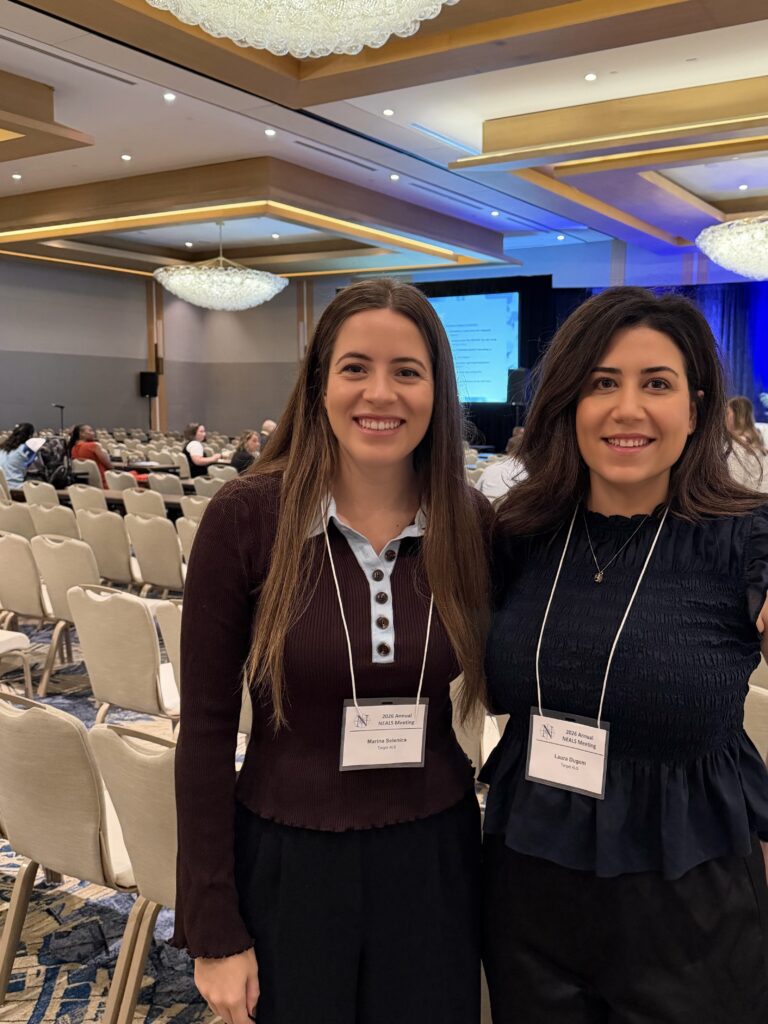
Target ALS team members, Laura Dugom and Marina Selenica, shared that some of the most meaningful conversations were not with fellow scientists, but with people living with ALS and their families.
“Every conversation with someone affected by ALS reminds us that behind every data point is a person, a family, and a community looking for answers. It reinforces how important it is to listen to the people we serve, understand what matters most to them, and ensure their experiences and perspectives help shape the research we’re doing today,” says Laura Dugom, Associate Director of Clinical Research at Target ALS.
The research we conduct would not be possible without the participants and families who give us their time, trust, and so much of themselves. Every sample donated, every assessment completed, and every experience shared helps build our comprehensive resources that accelerate ALS research.
“Through AGRI and PMTC, Target ALS is linking longitudinal clinical data and biofluids with postmortem tissue from the same individuals, allowing researchers to trace ALS across its whole arc, at depths no scan, blood test, or exam alone can reach. We strive to accelerate the science faster than ALS progresses,” says Marina Selenica, Core Project Manager at Target ALS.
Study participants are the reason these efforts exist; their samples and stories fuel this critical work.
Championing shared resources
We presented six posters highlighting the progress made possible by our Global Natural History Study (GNHS), the cornerstone of AGRI, and our PMTC. Several posters were presented by investigators and research coordinators from Target ALS-funded sites, whose expertise and contributions make this work possible
Four of the posters focused on our GNHS, which recently matured into a full-fledged global study with 18 international sites spanning the US and Canada, South America, mid-east, and Asia. Study participants with ALS visit the clinic five times over a period of 16-18 months, and healthy control participants complete two visits over a 12 month period. They complete assessments and share biospecimens at each visit, providing a wealth of information about ALS and its progression. The comprehensive nature of the study and the speed at which the data is shared and analyzed by researchers is unprecedented.
Two posters shared the impact of our PMTC, the largest ALS tissue repository that provides brain and spinal cord tissues to scientists across the globe. These tissues are uniquely valuable for studying ALS at the cellular and molecular level, allowing scientists to track disease progression, understand genetic influences, and identify therapeutic targets – insights that cannot be gained from other models.
Data from the GNHS and PMTC is available to all ALS researchers through our Target ALS Data Engine, which catalyzes new discoveries by curating high quality, multi-modal AI-ready datasets. The Data Engine connects clinical observations with molecular biology, links findings across populations and disease stages, and makes those resources easily accessible so discoveries can be independently explored, validated, and translated into clinical applications. Scientists can also request samples and tissue through our Research Cores. By building this infrastructure and championing open science, we’re breaking down barriers that slow progress in ALS research.
Presenting our impact
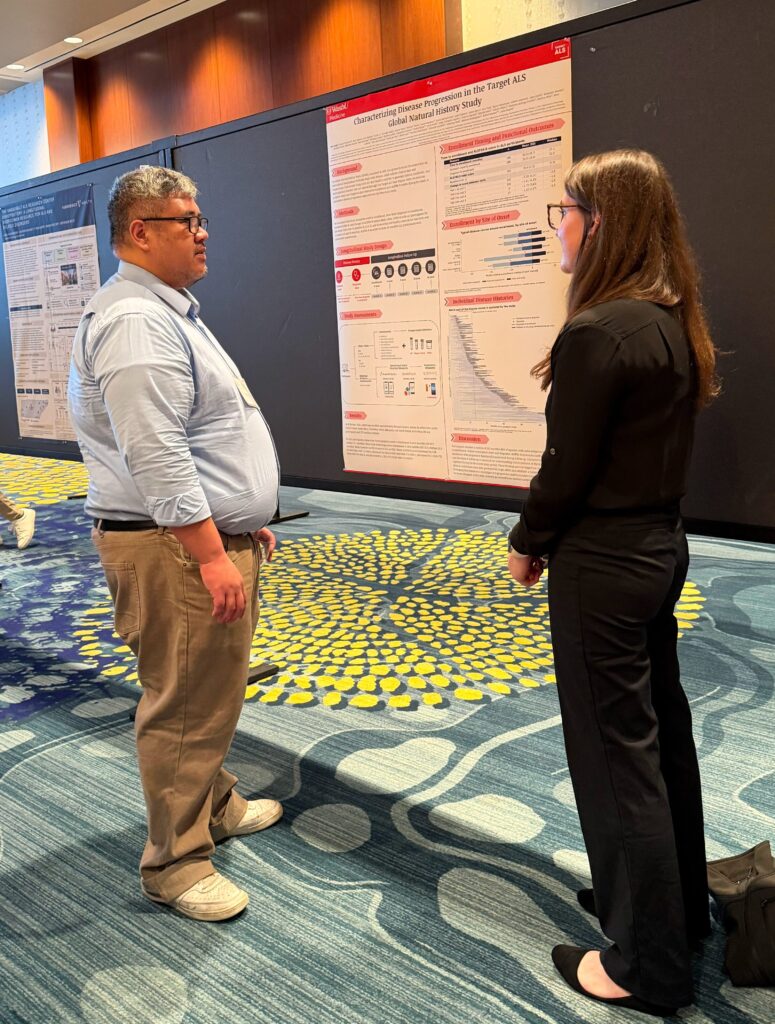
Characterizing Disease Progression in the Target ALS Global Natural History Study (Kyra Nagle, Washington University in St. Louis)
ALS progresses differently for everyone, but the time point at which participants enter research studies can significantly shape what we learn about the disease. Most people with ALS join the GNHS more than a year after diagnosis, so how much of the disease course are we actually seeing? To help researchers better model disease progression, we’re examining how enrollment timing and changes in functional abilities help us better understand disease progression across nearly 400 participants at 16 sites.
Key Takeaway: Understanding how ALS progresses over time, and how much of that progression occurs before participants enter studies, is critical to improving clinical trial design. These insights can help researchers better characterize disease trajectories, identify meaningful changes in function, and develop more sensitive measures to evaluate potential treatments.
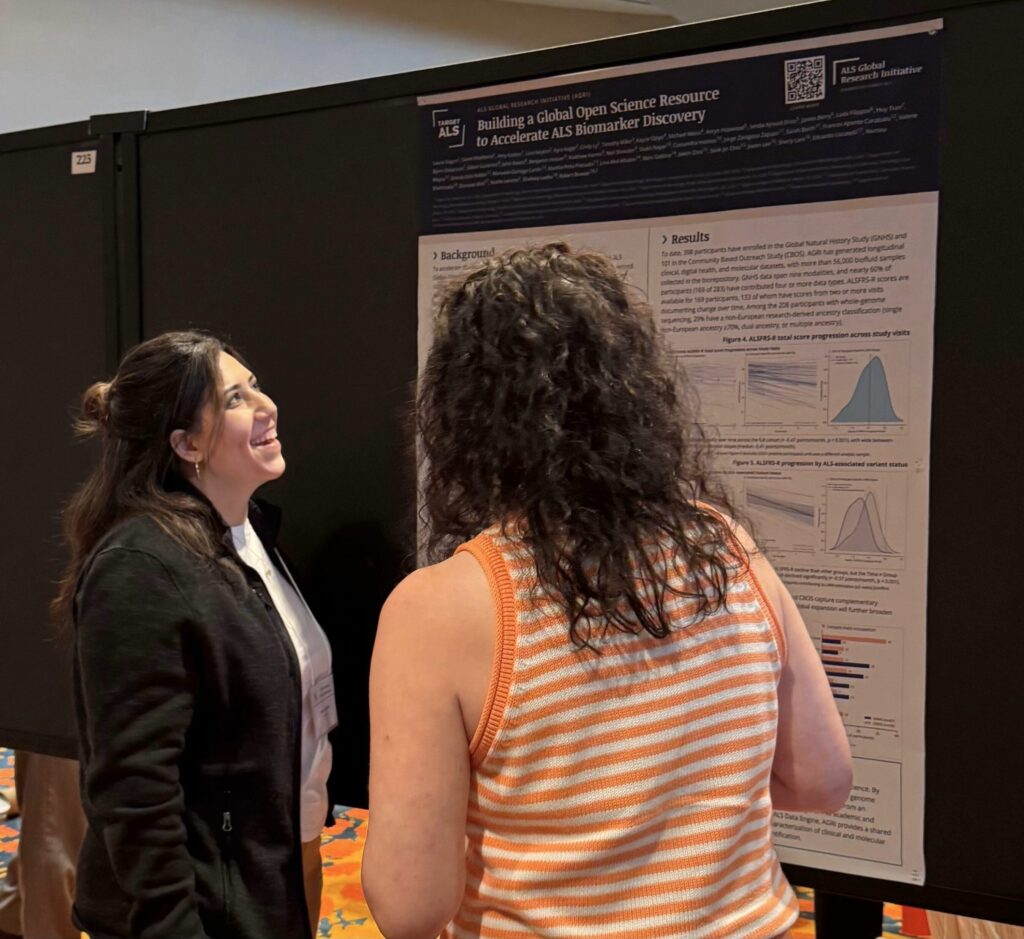
ALS Global Research Initiative (AGRI): Building a Global Open Science Resource to Accelerate ALS Biomarker Discovery (Laura Dugom, Target ALS)
Progress in ALS research depends on making high-quality data accessible and usable. So, what if every ALS dataset was made easily accessible to researchers within weeks of obtaining the data? This poster highlights how data from AGRI are linked in one harmonized, open resource: the Target ALS Data Engine. With 706 users and 50 reported research impacts, AGRI is already supporting scientific publications, supporting new therapeutic discoveries, and shaping clinical research.
Impact/Key Takeaway: We don’t let data or samples sit on a shelf. Instead, we make them available to researchers as they are generated, empowering academic and industry teams to explore new hypotheses, validate findings, and accelerate biomarker discovery. By breaking down data silos and providing researchers with harmonized, multidimensional datasets, AGRI helps academic and industry teams build on existing discoveries, accelerate collaboration, and move promising research closer to meaningful treatments.
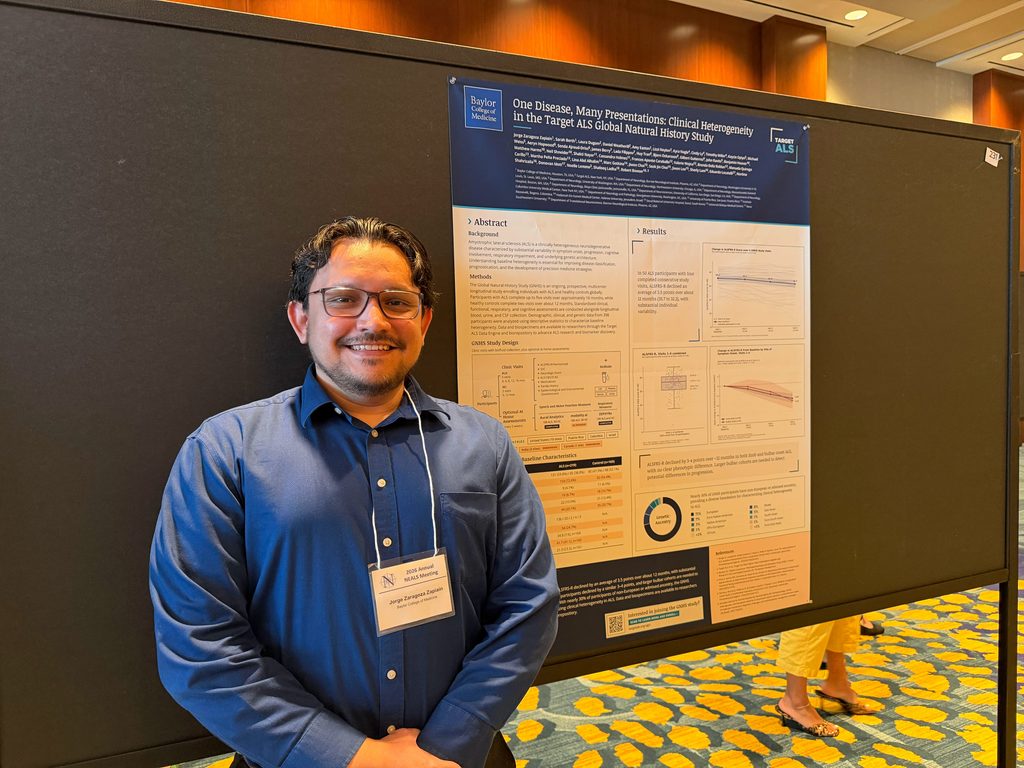
One Disease, Many Presentations: Clinical Heterogeneity in the Target ALS Global Natural History Study (Jorge Zaragoza Zapiain, Baylor College of Medicine)
No two people experience ALS the same way. Differences in symptoms, disease progression, and genetic backgrounds make ALS incredibly complex. Through the Target ALS Global Natural History Study, we’re capturing this variability across a diverse, global cohort to better understand what drives these differences and how they may inform future treatments. With nearly 30% of participants representing non-European or admixed ancestry, the study provides researchers with longitudinal clinical data and biospecimens to investigate disease heterogeneity across populations. These resources are available to the research community today to support biomarker discovery and more personalized approaches to ALS research.
Key Takeaway: ALS is not a one-size-fits-all disease, and our approach to research and treatment shouldn’t be either. Understanding how ALS differs across individuals and populations is essential to identifying meaningful biomarkers, improving clinical trial design, and ultimately matching the right treatments to the right people. ALS doesn’t recognize borders, and neither should our research.
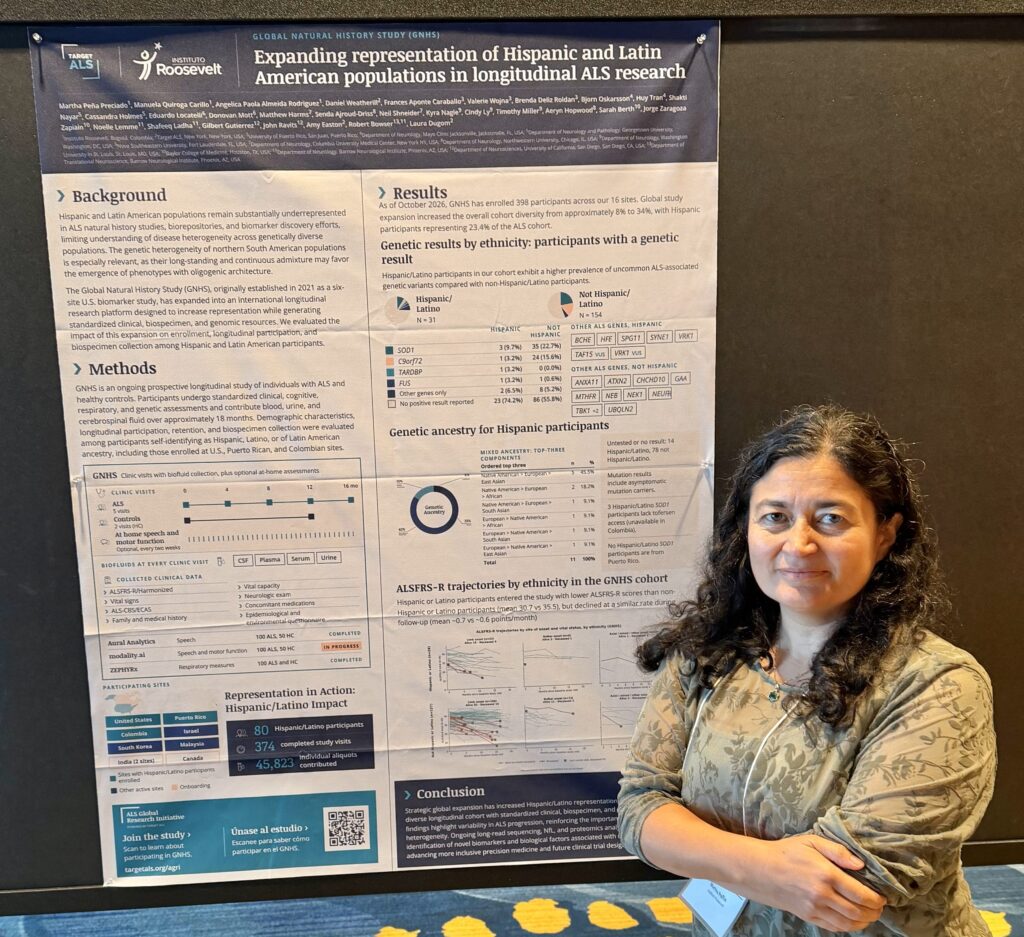
Global Natural History Study (GNHS): Expanding Representation of Hispanic and Latin American Populations in Longitudinal ALS Research (Dra. Martha Peña, Instituto Roosevelt, Bogotá, Colombia)
ALS affects people across every community, yet Hispanic and Latin American populations have historically been underrepresented in research. Through the Target ALS Global Natural History Study, we’re working to change that. By expanding into Puerto Rico and Colombia and building partnerships with local research teams, we’re creating more opportunities for participation and ensuring ALS research better reflects the populations affected by the disease. Interestingly, The Latino population tends to have genetic mutations that differ from people of European descent, and understanding how those mutations impact disease provides insights about ALS overall. Target ALS’ efforts have helped increase representation of participants with non-European or admixed ancestry from 8% to 34%. With 80 Hispanic/Latino participants, 374 completed study visits, and 45,823 biospecimen aliquots collected, we’re building a valuable longitudinal resource that researchers can access today to investigate disease progression, genetic diversity, and potential biomarkers across populations.
Impact/ Key Takeaway: Representation is more than enrollment numbers. It’s about ensuring the discoveries we make and the treatments we develop have the potential to benefit everyone living with ALS. Advancing ALS research means ensuring no community is left out of discovery. By including underrepresented populations and making their contributions available for research, we’re helping uncover differences that might otherwise go undetected and laying the foundation for more inclusive clinical trials and precision medicine.
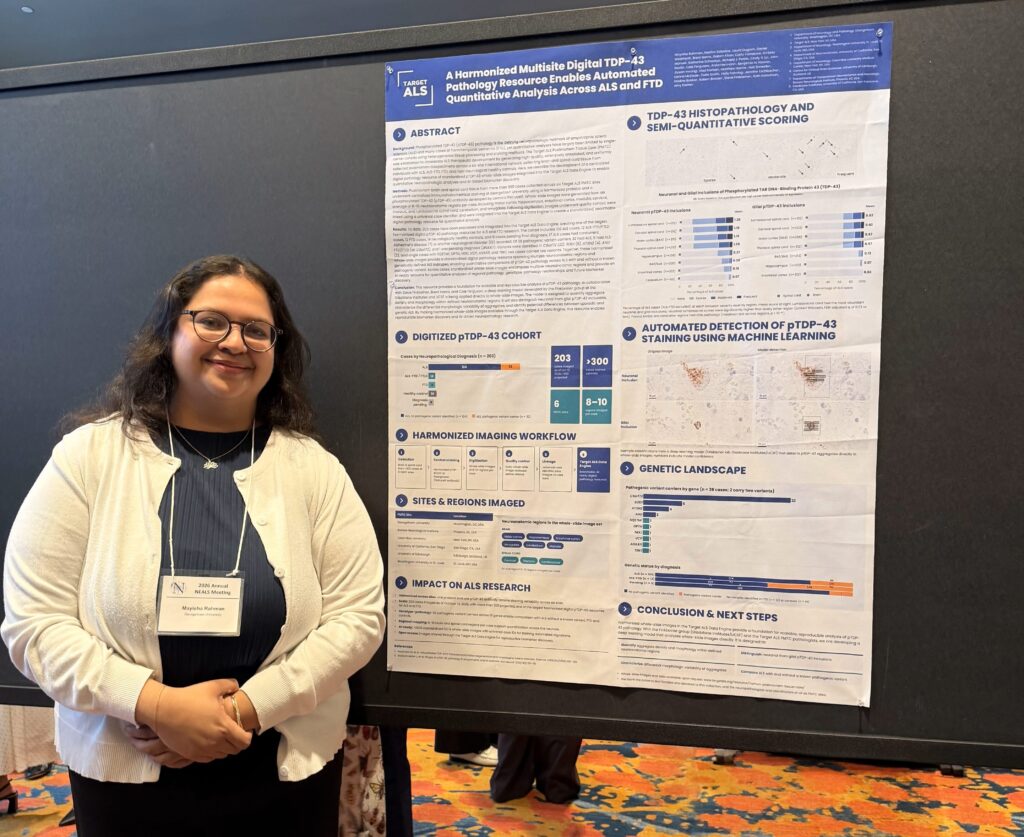
A Harmonized Multisite Digital TDP-43 Pathology Resource Enables Automated Quantitative Analysis Across ALS and FTD (Mayisha Rahman, Georgetown University)
TDP-43 pathology is a defining feature of nearly all ALS cases, yet differences in tissue processing and analysis have made it challenging to compare findings across research institutions. Through the Target ALS PMTC, we’re standardizing pathology methods across six sites and building a harmonized digital resource to support ALS and FTD research. With 203 digitized cases and more than 2,000 quality-controlled whole-slide images, this resource links TDP-43 pathology to genetic data, including 38 carriers of pathogenic variants across 10 genes. Initial analyses identified the highest burden of neuronal and glial inclusions in the lumbosacral spinal cord. In collaboration with the Finkbeiner lab, deep learning tools are already being used to detect and quantify TDP-43 aggregates, demonstrating the potential for scalable, automated pathology analysis.
Impact/ Key Takeaway: Understanding where and how TDP-43 pathology develops is essential to uncovering disease mechanisms and evaluating therapies targeting the underlying biology of ALS and FTD. By creating a standardized, AI-ready pathology resource, we’re helping researchers move beyond subjective assessments toward more consistent, quantitative measures of disease. By making these tools and data accessible to the research community, Target ALS is helping accelerate discoveries that a single laboratory can’t achieve alone.
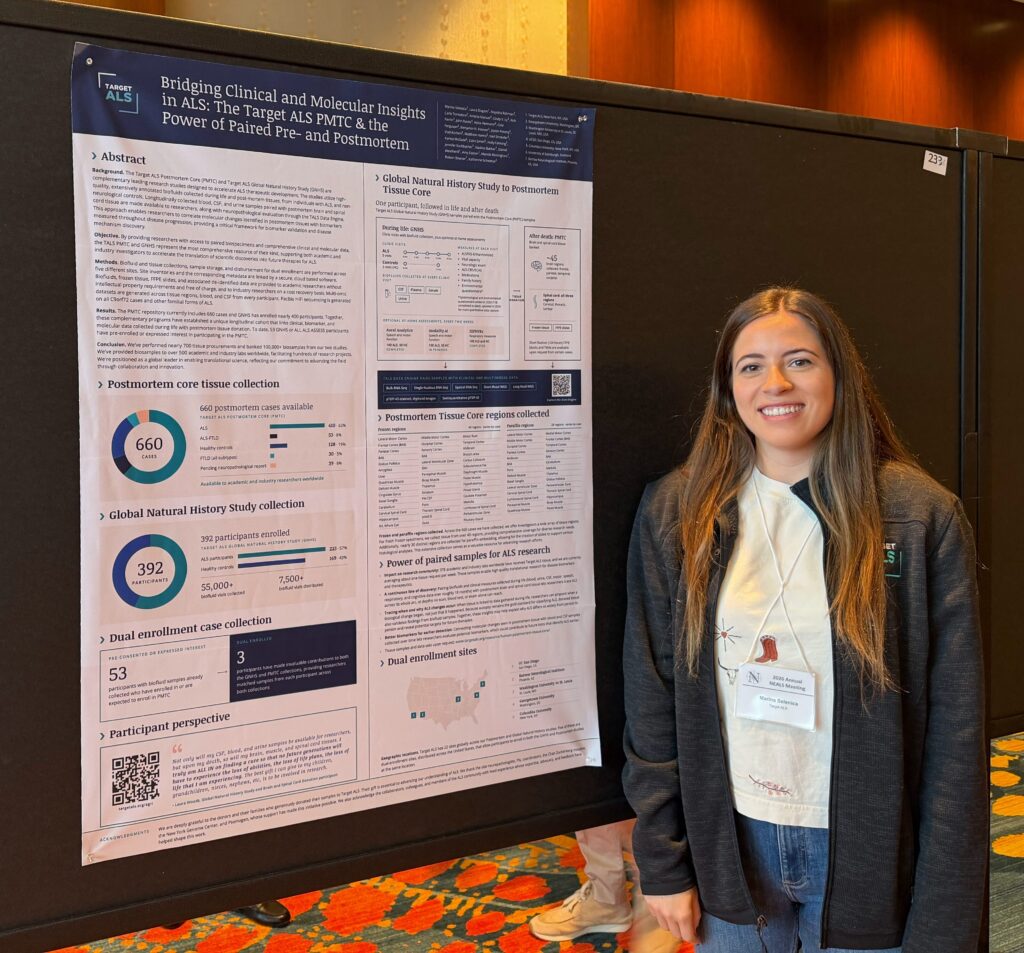
Bridging Clinical and Molecular Insights in ALS: The Target ALS PMTC & the Power of Paired Pre- and Postmortem (Marina Selenica, Target ALS)
What if we could connect the biological changes observed during life with what we learn from the brain and spinal cord after death? By listening to the needs of the scientific community, we’re identifying new ways to bridge research gaps and accelerate discovery. Through the GNHS and PMTC, we’re creating opportunities to link longitudinal clinical data and biofluids with postmortem tissue from the same individuals, providing researchers with a more complete picture of ALS progression and new opportunities to advance biomarker discovery.
Key Takeaway: A biomarker is only as valuable as its ability to reflect what’s actually happening in the disease. By connecting clinical and molecular changes observed during life with neuropathological findings after death, researchers can validate whether biomarkers measured in blood and CSF truly reflect the underlying biology of ALS. This creates a critical bridge between discovery and clinical application, helping advance biomarkers that can reliably track disease progression, inform treatment decisions, and measure whether therapies are targeting the disease itself.
Looking ahead
Seeing the work made possible by AGRI and PMTC across our posters and featured by other groups validates that we are meeting this moment in ALS research. Thank you to everyone who stopped by our posters, asked thoughtful questions, and shared ideas. While we were already looking forward to next year before attending NEALS, the meeting added to our excitement about what we can accomplish together.
Interested in participating in research? Click here to learn more about AGRI or fill out this form to get in touch with our team.
Interested in using our resources for your research? Learn more about:
- Get access to the Target ALS Data Engine
- Request tissue samples from our Postmortem Tissue Core
- Request biofluid samples from our Longitudinal Biofluids Core
Related News

Announcing the 2026 Biomarker Consortia Awards
October 20, 2026

Science on Target: Q3 Publications from our Innovation Ecosystem
October 7, 2026
Science on Target: Q3 Research We Enable
October 7, 2026
Science on Target: Q3 Research We Conduct
October 7, 2026