

Basic Biology
To identify effective new therapies, we must have a strong understanding of the basic biology of ALS: what’s happening in the disease and why? Approximately half of our funded portfolio aims to answer those questions, analyzing ALS at every level, from RNA to proteins and single cells to systems.
ALS is a disease of the motor neurons. However, emerging research from Target ALS-funded scientists is revealing that it’s not that simple; there’s a complex breakdown involving the immune system, support cells, blood vessels, and even the way genes are chemically regulated. These findings collectively signal a meaningful shift in how the field understands ALS: once believed to be a bystander, the immune system may play an active role in neurodegeneration.
Revealing the Role of the Immune System in ALS

Basic Biology Consortium
Dr. Jack Humphrey (Icahn School of Medicine at Mount Sinai, pictured left) and his collaborators are studying how immune cells in the nervous system track with and influence survival in ALS. Taking a unique approach, the team specifically set out to study differences in genes in the brain in high, medium, or slow disease progressors. They identified two immune markers, CHIT1 and C3, that strongly track with rapid disease progression. Their dataset provides key evidence to elevate these markers as candidate biomarkers for disease progression and potential therapeutic targets.

Philip Hasel
University of Edinburgh

Andrea Malaspina
UCL Queen Square Institute of Neurology

Rickie Patani
National University of Singapore (NUS)

David Gate, Northwestern University, New Academic Investigator
By analyzing brain and spinal cord tissue samples, Dr. Gate’s research found that neuroinflammation is higher in the spinal cord rather than the brain. Additionally, this signal is amplified in C9orf72 ALS relative to sporadic ALS. Specifically, immune cells in the brain called microglia showed the most striking gene changes, indicating that their protective function is impaired in ALS.
Basic Biology Consortium
Dr. Sattler’s lab is one of the first to deeply study the impact of TDP43 dysfunction in glial cells, support cells of the nervous system. They have discovered a number of abnormalities in patient astrocytes and are testing how these changes may be toxic to neighboring motor neurons.

Rita Sattler
Barrow Neurological Institute

Yuna Ayala
St. Louis University

Christopher Donnelly
UT Southwestern Medical Center

Patrick Pirrotte
Translational Genomics Research Institute (TGen)

Kendall Van Keuren-Jensen
Translational Genomics Research Institute (TGen)

Industry-Led Consortium
Dr. Amanda Guise (Biogen, pictured left) analyzed proteins within single cells, quantifying more than 1,500 proteins per motor neuron in brain and spinal cord tissue. A small pilot study revealed an increased immune response within motor neurons in tissue from people with C9 ALS compared to tissue from healthy controls. Taken together with Dr. Gate’s data, inflammation is occurring both within neurons and across immune cells in the brain.

Paymaan Jafar-nejad
Ionis Pharmaceuticals

Jeffrey Rothstein
Johns Hopkins University

Alyssa Coyne
Johns Hopkins University
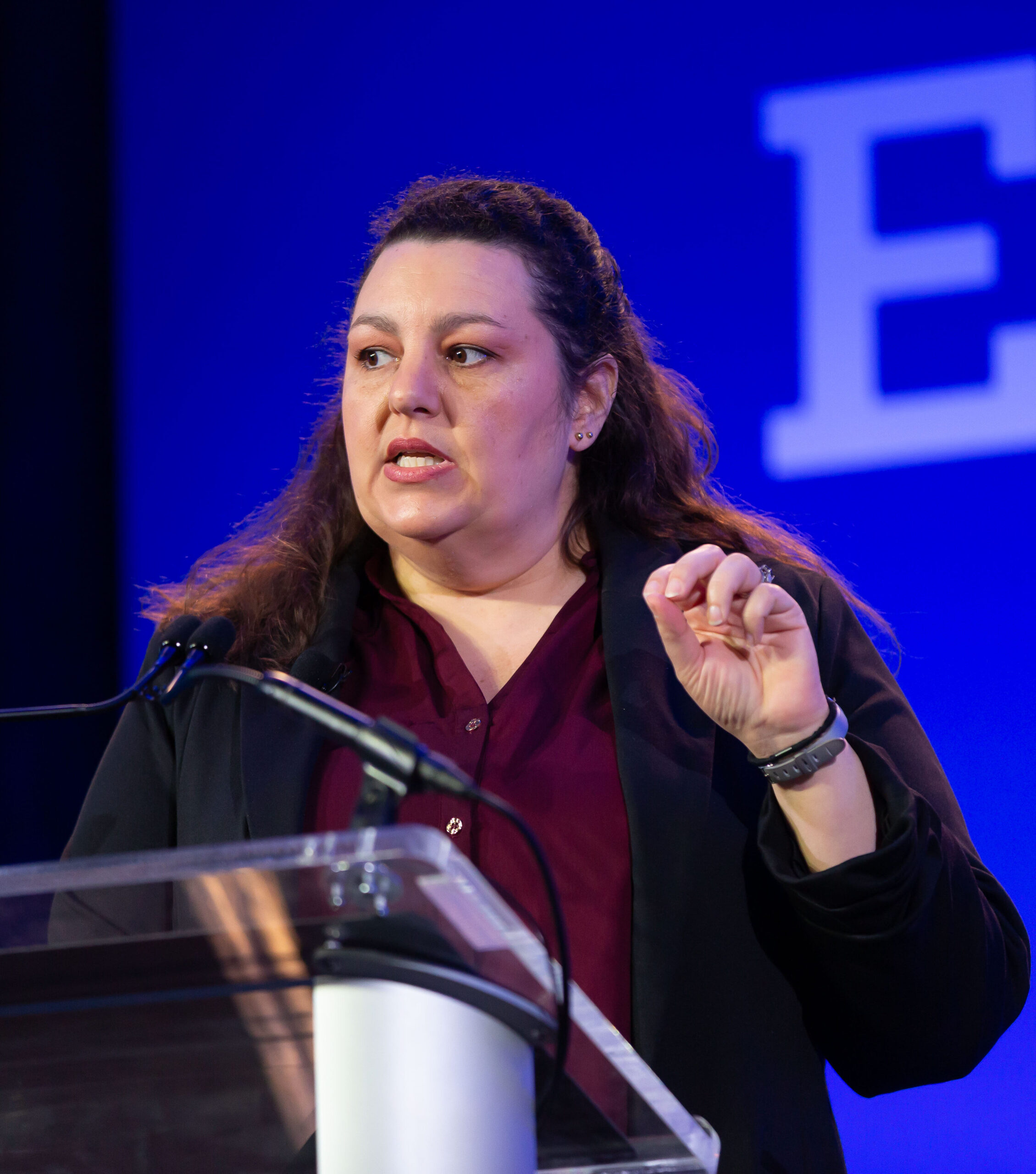
Lindsey Goodman, PhD
Target ALS Springboard Fellow, Baylor College of Medicine
When neurons are under stress, they generate toxic lipid byproducts that normally get handed off to glial cells to clean up. In ALS and Frontotemporal Dementia (FTD), this cleanup system is disrupted. Dr. Goodman is studying whether the proteins Tau and TDP-43 in glial cells make lipid damage worse. The potential impact is twofold: first, her work could point to new lipid-based biomarkers, and second, it could reveal glial lipid droplets as a potential therapeutic target.

Chloe Lopez-Lee, PhD
Target ALS Springboard Fellow, Icahn School of Medicine at Mount Sinai
People with ALS often experience blood-brain barrier leaks and inflammation in the cells lining blood vessels, signs that the immune system and vascular system are tightly linked in the disease process. A rare genetic variant in a gene called CREB3 appears to strengthen vascular health and lower ALS risk. Dr. Lopez-Lee is evaluating whether boosting CREB3 protein levels can restore healthy immune and vascular function. She’s also identifying additional vascular proteins that provide resilience. Her work could lead to development of new treatments that strengthen the brain’s vascular system and reduce damage.
Key Takeaway: Taken together, these projects provide a strong argument. The immune system may not merely be a responder to neurodegeneration, but a potential contributor and even initiator — one whose earliest actions in the nervous system may set ALS in motion. This reframing carries profound implications for therapy development — pointing researchers away from motor-neuron-only targets and toward strategies that restore immune balance, protect vascular integrity, and address the broad cellular environment in which motor neurons live and die.
Active Grants
Loading map...
Related News

Science on Target: Q3 Publications from our Innovation Ecosystem
October 7, 2026

Science on Target: Q3 Research We Enable
October 7, 2026
Science on Target: Q3 Research We Conduct
October 7, 2026
Science on Target: Q3 Research We Fund
October 7, 2026