Enabling the Best Ideas in ALS Research
The best ideas in ALS research require more than just funding. We launched our Research Cores to create, collect, and provide expedited access to critical tools and resources like data, biosamples, stem cells, and more. Historically, these resources were difficult to access, cost-prohibitive, and lacked consistent quality, creating barriers for scientists worldwide from pursuing their ideas on ALS. To date, we’ve enabled more than 1,950 projects across the globe with no-strings-attached support.
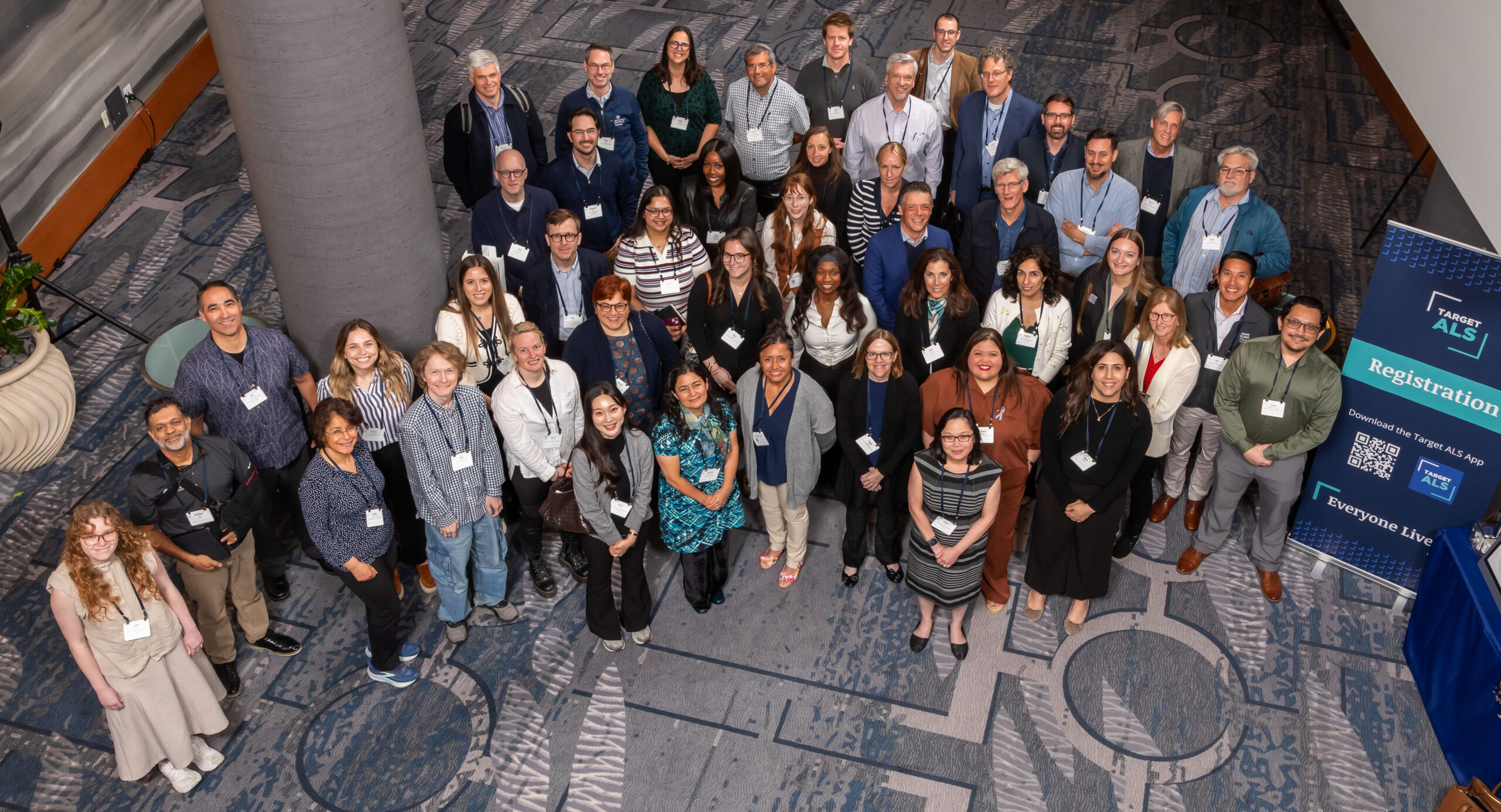
While the focus of the Annual Meeting is our funded research portfolio, before the main event begins, we convene with the principal investigators and coordinators who lead our Research Cores focused on biosamples. While previous Core Days focused on building and expanding these resources, this year’s gathering marked an inflection point: our biofluid and tissue repositories and the datasets generated from them have now grown large enough to support analyses that can help answer longstanding questions about ALS.
Longitudinal Biofluids Core: Powered by the Global Natural History Study
We are building the most comprehensive and inclusive biofluid repository for ALS, designed to accelerate the discovery and validation of biomarkers. Powered by our Global Natural History Study (GNHS), the Longitudinal Biofluids Core includes cerebrospinal fluid, blood, and urine collected over time from participants with ALS and healthy controls across international sites. Scientists across the globe can request these precious samples to advance their research.
Biofluids by the numbers


18
Targeted global sites


350
Participants in our Global Natural History Study


42K+
Biofluids collected
Because we control the collection of samples end-to-end, they’re paired with detailed clinical, demographic, and epidemiologic information, at-home digital health measures, and multi-omic datasets. As the GNHS matures, this data is primed for analysis.
- We partnered with digital health companies Aural Analytics and ZEPHYRx, which enable at-home testing for measuring speech and breathing, respectively, in study participants with ALS. These sub-studies have been completed, and researchers can now analyze the data from these efforts to identify potential biomarkers of disease progression.
- By working with populations historically underrepresented in ALS research, we’re building datasets that will help us put pieces of the ALS puzzle together. Our sites in Colombia and Puerto Rico have already supported the growth of a large Hispanic cohort of participants, and these sites can now analyze their own ethnic groups. We can finally examine trends in disease progression and whether it varies by country. Plus, our partnership with international sites provides a pathway to validate state-of-the-art scales and launch clinical trials in parts of the world where that wasn’t previously possible.

Reflections from the Target ALS team
“Progress shared during Cores Day underscored the growing impact of the GNHS and Postmortem Tissue Core as a foundation for ALS discovery. With each participant, visit, and data point collected, these resources become increasingly powerful and an even richer platform for understanding disease biology, identifying biomarkers, and advancing the development of future therapies. This convening serves as a forum for scientific leadership, bringing together experts across disciplines to identify emerging opportunities and ensuring the research we conduct continues to drive innovation in ALS research and therapeutic development.” – Laura Dugom, MPH, Associate Director of Clinical Research, Target ALS
Postmortem Tissue Core: A Direct View of ALS in the Brain and Spinal Cord
Our Postmortem Tissue Core provides scientists with access to one of the largest and most comprehensive repositories of brain and spinal cord tissues worldwide. These tissues, paired with de-identified clinical and genomic data, offer a direct window into the cellular and molecular structures and pathways affected in ALS.
Postmortem Tissue Core by the numbers


6
Postmortem sites


650+
Cases collected


120+
Genetic mutation cases cataloged in our tissue bank
Beyond expanding the Core, we’re taking on new initiatives, developing tools, and generating datasets to accelerate target and biomarker identification for ALS.
- Analyzing 200 cases from the Core, Dr. Panos Roussos (Mount Sinai School of Medicine) is leading a significant effort to produce the most comprehensive single-cell dataset to date for ALS. This work will profile tens of thousands of individual cells from brain and spinal cord tissues in ALS, FTD, and healthy controls, offering an exceptionally granular view at changes within cells in disease. Unlike existing datasets that examine mixed populations of cells together, single-cell analyses can pinpoint disease associated changes within individual cell types, creating new opportunities to better understand disease mechanisms and potentially uncover new therapeutic targets.
- TDP-43 aggregates can only be seen in postmortem brain and spinal cord tissue on a slide under a microscope. In an effort to democratize access to these tissues, we’re conducting a large-scale effort to create slides of postmortem tissue, perform staining so that the TDP-43 aggregates are visible, digitize the slides, and create an AI-driven image algorithm to support analysis. To date, digitized images for 247 cases are currently available on the Target ALS Data Engine. This resource will help scientists analyze the hallmark of ALS, TDP-43 dysfunction, at the molecular level, informing our understanding of disease and its progression.

Reflections from the Target ALS team
“Our Postmortem Tissue Core provides scientists access to one of the largest and most comprehensive repositories of brain and spinal cord tissue worldwide. We are also prioritizing dual enrollment across our GNHS and Postmortem studies to capture a clinical snapshot during life that can be directly linked to postmortem tissue after death, creating an even richer biorepository. Our annual Cores Day enables collaborative discussion to identify opportunities and ensure we are advancing science faster than ALS progresses.” – Marina Selenica, MS, Core Project Manager, Target ALS
Key Takeaway: The ALS community’s participation in efforts like the GNHS and brain and spinal cord donation is essential to the advancement of ALS research. At Target ALS, we don’t take these gifts for granted. Every sample and dataset are made available to researchers immediately with no restrictions, enabling faster scientific discovery and collaboration across the ALS field. And our efforts are constantly evolving to generate the most comprehensive suite of information and tools possible to the community of scientists searching for answers.
Explore The Cores


Receive updates on our Research Cores
Never miss a research update.
